May 13, 2026 • Marisol Vane • 9 min reading time • Prices verified June 4, 2026
What Dog Bed Foam Specs Actually Tell You About Large-Breed Joint Support
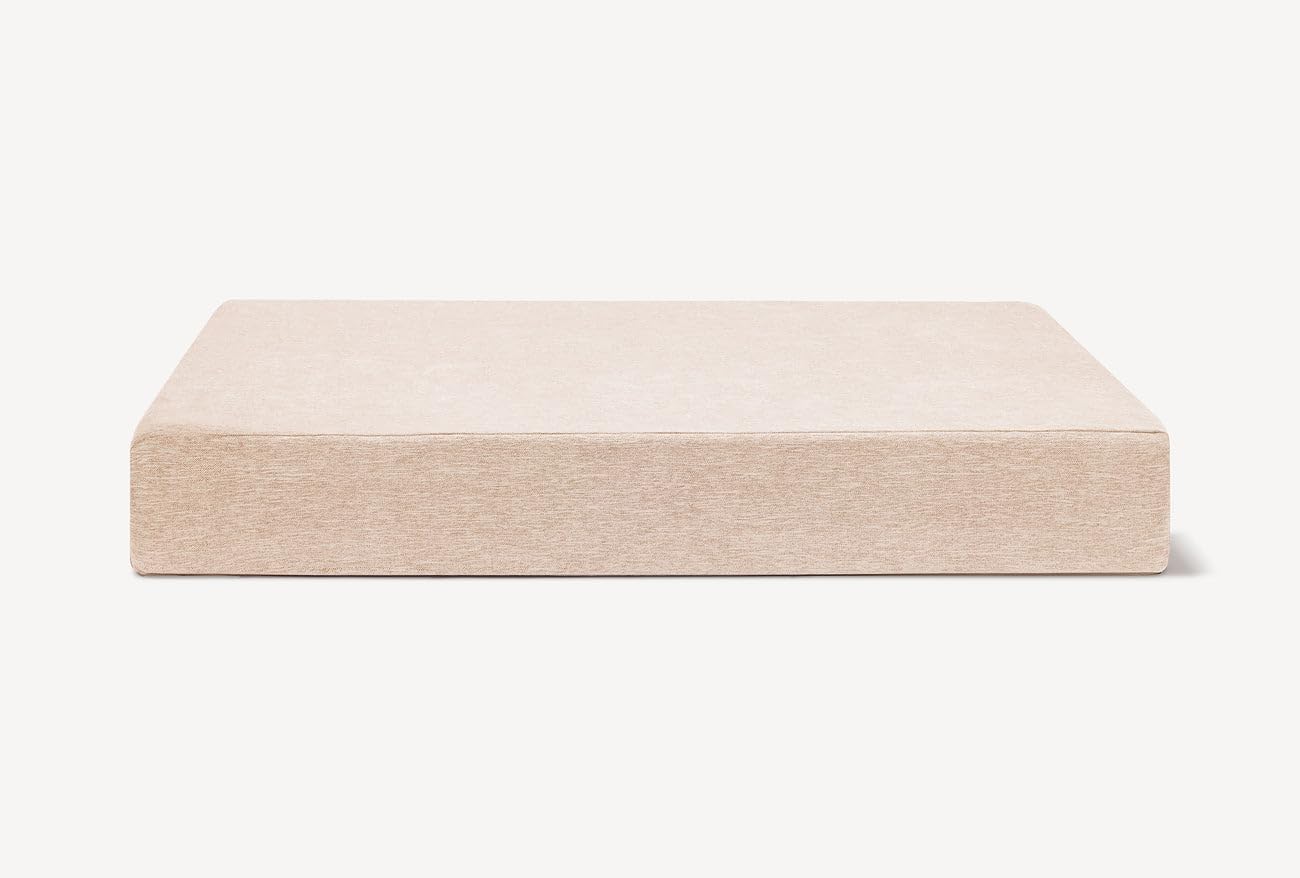
If you’ve ever bought a dog bed labeled “orthopedic” and watched your 90-pound Labrador sink straight to the floor within three months, you already know the word means almost nothing on its own. “Orthopedic” is a marketing term, not a regulated standard — any manufacturer can print it on the hang tag. What actually determines whether a bed will support a large dog’s joints over time comes down to two foam properties that most product pages bury or skip entirely: ILD (Indentation Load Deflection, the measure of how firm or soft a foam feels under pressure — specifically, the pounds of force required to compress a 4-inch foam sample by 25%) and foam density (measured in pounds per cubic foot, this tells you how much raw material is packed into the foam and predicts how long it holds its shape before breaking down). Get these two numbers right for your dog’s weight and condition, and you’ve done more real evaluation than ninety percent of buyers who simply squeeze a display model at the pet store.
This guide is for owners and practitioners who are past the “is this better than a blanket on the floor?” question and into the harder one: which specific foam construction actually delivers therapeutic value for a large or giant breed, and how do I verify it before I buy? We’ll walk through the specs, show the tradeoffs, and end with a clear decision framework by use case.
Why Foam Specs Matter More for Large Breeds Than for Small Ones
A 15-pound dog exerts relatively little pressure per square inch on a resting surface. A 90-pound German Shepherd or a 130-pound Great Dane is a different physics problem entirely. At those weights, an under-density foam doesn’t just feel less comfortable — it bottoms out, meaning the dog’s bony prominences (hips, elbows, sternum) make contact with the platform below the foam. At that point, the bed is providing zero cushioning and may actually concentrate pressure at those contact points, which is the opposite of joint support.
VCA Animal Hospitals’ overview of canine hip dysplasia and environmental management notes that resting surface quality is a meaningful environmental variable for dogs with existing joint pathology — not a substitute for veterinary care, but a genuine quality-of-life factor. Tufts University’s Cummings Veterinary Medical Center (published in their Your Dog guidance series) similarly flags that hard resting surfaces can exacerbate discomfort in dogs with osteoarthritis, and that the goal of a therapeutic surface is pressure distribution, not just softness.
The practical implication: softness and support are not the same thing. A very soft, low-density foam feels plush initially but fails to distribute weight; a properly rated medium-firm foam with adequate density actually suspends the dog’s body and reduces point-loading at joints. This is the core tradeoff the specs help you navigate.
Reading the Two Numbers That Actually Matter
ILD: The Firmness Number
ILD ratings for dog bed foam typically run from about 14 (very soft, almost gel-like) up to 40 or higher (firm, closer to a firm human mattress). The AKC’s large-breed senior dog care guide suggests that dogs with joint conditions generally benefit from medium-firm surfaces rather than the very soft foams that feel appealing in-store.
For practical guidance by weight class:
By the numbers — ILD targets by dog weight:
| Dog weight | Suggested ILD range | Notes |
|---|---|---|
| Under 40 lbs | 14–20 | Soft support adequate; density matters less |
| 40–80 lbs | 20–28 | Medium-firm; the most common “orthopedic” range |
| 80–120 lbs | 28–36 | Firm enough to prevent bottoming out |
| 120 lbs+ | 34–40+ | High-ILD or multi-layer construction required |
These ranges reflect manufacturer specifications and the consensus of published veterinary guidance — not a proprietary formula. The point is that a single ILD product marketed to “all large breeds” is already making a compromise: a 50-pound Boxer and a 150-pound Mastiff are not the same problem.
Foam Density: The Durability Number
Density is reported in pounds per cubic foot (PCF). For human mattresses, 1.8 PCF is considered the lower threshold for quality foam; below that, breakdown accelerates. Dog bed foam should be evaluated on the same continuum — and because dogs often sleep in the same position repeatedly and may knead or circle the surface, density predicts longevity directly.
- 1.5 PCF or below: Common in budget beds; expect significant compression loss within 6–12 months under a large dog
- 1.8–2.0 PCF: The functional minimum for a bed that will hold shape for 2+ years under regular large-breed use
- 2.5 PCF and above: Where premium dog-specific orthopedic manufacturers play; Whole Dog Journal’s orthopedic bed evaluation guidelines identify this range as the threshold for beds worth calling clinically supportive
Big Barker’s published foam specification documentation — one of the few dog-bed brands that discloses these numbers directly — specifies a 4-inch base layer at 2.0+ PCF combined with a graduated ILD profile. Orvis’s Big Dog Bed product specification documentation lists similar multi-layer construction for their higher-weight configurations. The significance isn’t brand loyalty; it’s that these specs exist, are disclosed, and can be verified — which is the minimum bar worth setting for any purchase at this price tier.
Multi-Layer Construction vs. Single-Slab Foam
Once you’ve got the ILD and density basics, the next question is whether a single slab of foam or a layered construction is the right call for your dog.
Single-slab foam (typically 4–6 inches of uniform foam) is simpler to evaluate — you have one ILD and one density to assess. The tradeoff is that a single firmness can’t optimize simultaneously for pressure relief at the surface (which benefits from softer foam) and structural support at the base (which requires firmer foam).
Multi-layer construction separates these functions: a softer top layer (lower ILD, often 1–2 inches) handles immediate pressure distribution and conforms to the dog’s body contours, while a firmer, higher-density base layer (3–5 inches) prevents bottoming out and provides the structural platform. This is the same logic behind human orthopedic mattresses and is particularly relevant for dogs with existing orthopedic diagnoses — hip dysplasia, elbow dysplasia, degenerative joint disease — where both surface comfort and load-bearing capacity matter.
The practitioner-level tradeoff here is cost versus clinical relevance. Multi-layer orthopedic beds from established brands run $200–$450 for large configurations as of mid-2026 pricing. If you’re advising a client at a rehabilitation practice or specifying beds for a kennel environment, the multi-layer construction justifies the premium for dogs with diagnosed conditions. For a healthy three-year-old Labrador with no current joint pathology, a high-quality single-slab bed at the right ILD and density (2.0+ PCF, ILD 28–36 for a dog in the 80–120-pound range) covers the use case without overspending on layered construction.
The Cover and Platform Variables People Overlook
Foam specs are the core of the evaluation, but two secondary variables meaningfully affect whether those specs deliver in practice.
Cover construction: A thin, poorly secured cover that bunches or slides under the dog creates pressure differentials that partially defeat the foam’s pressure-distribution function. Look for covers with non-slip bottom surfaces, covers that are machine-washable without compromising foam attachment, and — for dogs with incontinence or post-surgical situations — waterproof inner liners rated to be vapor-permeable rather than simply waterproof. A completely vapor-impermeable liner traps heat, which discourages use in warm climates or for dogs that run hot.
Platform height: Beds with 4–6 inches of total height allow a large dog to get on and off with a natural range of motion; beds under 3 inches may require more joint effort to rise from, which matters acutely for dogs with hip or elbow pathology. Canine rehabilitation practitioners consistently note (in aggregated reviews and clinical guidance published by organizations like the Whole Dog Journal) that ease of ingress and egress is a factor owners underweight when selecting beds for post-surgical recovery.
When Memory Foam Is the Right Choice — and When It Isn’t
Memory foam (technically viscoelastic polyurethane foam) conforms to body heat and pressure over time, which distributes weight broadly and reduces point loading at bony prominences. For a dog with existing joint pain or post-operative recovery needs, this conforming property has real value.
The tradeoff: memory foam is temperature-sensitive. It firms up in cold environments (less conforming, reduced pressure distribution) and softens significantly in heat (potential for bottoming out in warm climates or for dogs with dense coats). High-quality memory foam products address this with density ratings — 4.0–5.0 PCF is the range where memory foam maintains therapeutic properties across a wider temperature range — but many dog-bed products use memory foam at 2.5–3.0 PCF, where temperature sensitivity is more pronounced.
For dogs without diagnosed joint pathology, a high-density traditional polyurethane foam at the right ILD often outperforms lower-density memory foam in durability and consistency. Memory foam’s advantage is specific to conforming pressure relief, which matters most for dogs with confirmed ortho diagnoses or post-surgical resting requirements.
The Decision Framework
If you’re evaluating orthopedic dog beds for a large or giant breed and want a clear rule set:
If the dog weighs over 80 lbs and has no diagnosed joint condition: Prioritize foam density (2.0+ PCF minimum) and ILD in the 28–36 range. Single-slab or multi-layer both work. Budget $150–$280 for a construction that will hold shape for 2–3 years.
If the dog has diagnosed hip dysplasia, elbow dysplasia, or osteoarthritis: Move to multi-layer construction with a softer conforming top layer and a firm, high-density base. Memory foam top layers at 4.0+ PCF density add clinical-grade pressure distribution. Budget $280–$450 and verify that the brand discloses ILD and PCF — if they don’t publish these numbers, treat the “orthopedic” claim as unverified marketing.
If you’re specifying for a rehabilitation or kennel environment at volume: Require disclosed specs from the manufacturer before purchase. Multi-bed procurement without ILD and density documentation is a durability and liability risk. Big Barker and Orvis are among the brands that publish full foam specs; use that documentation as the baseline for vendor comparisons.
If budget is the binding constraint: A single-slab bed at 2.0+ PCF and ILD 28–34 from a brand that discloses specs will outperform a “premium-branded” bed with undisclosed foam construction at twice the price. The spec sheet, not the marketing language, is the product.
The word “orthopedic” will keep appearing on every price tier of the market. Your job — whether you’re buying for your own dog or advising a client — is to ask two questions before anything else: What is the ILD, and what is the foam density? If a brand can’t answer both, the conversation is over.