April 20, 2026 • Marisol Vane • 10 min reading time • Prices verified June 4, 2026
Dog Carrier Backpacks: How to Match Pack Design to Your Dog's Weight, Back Length, and Your Body
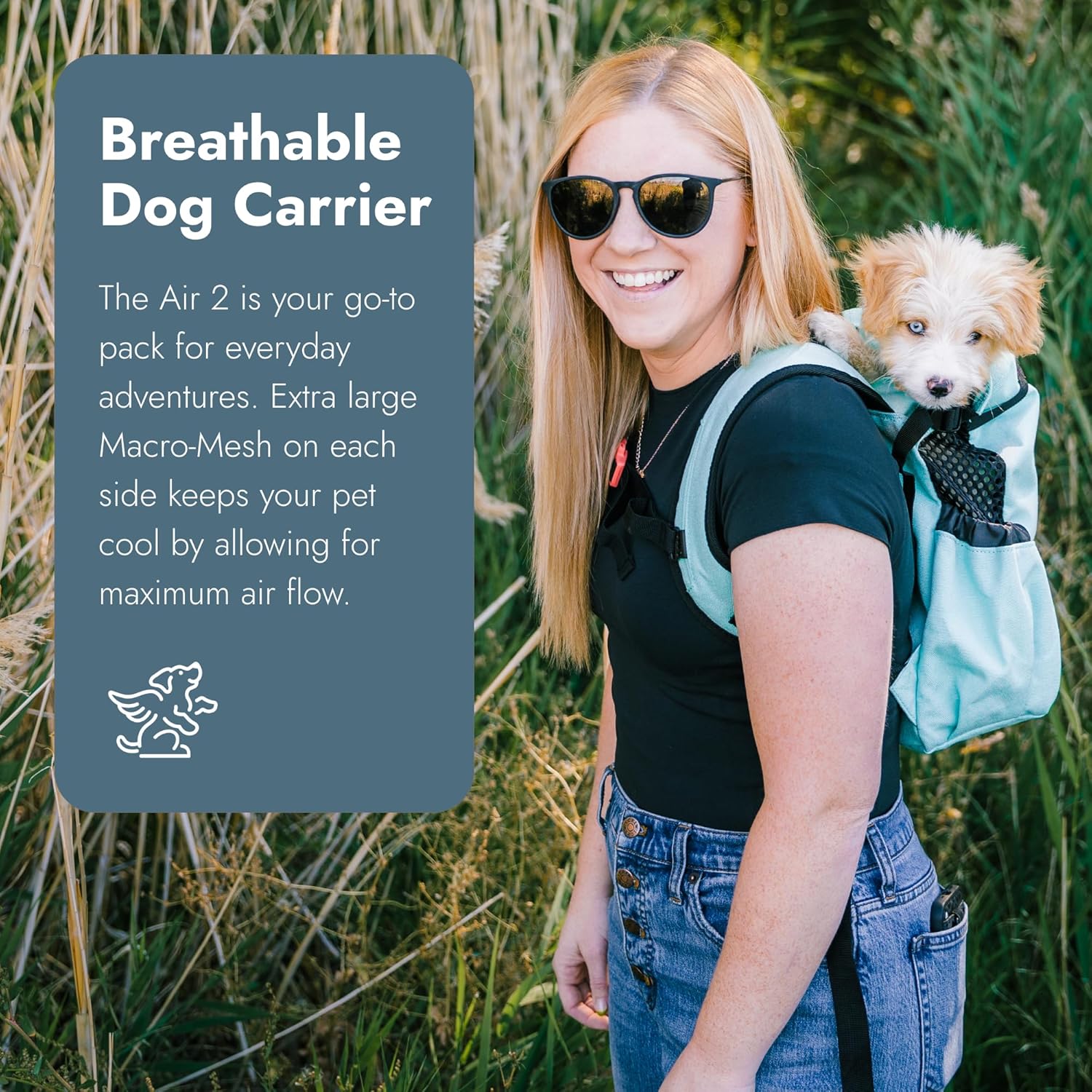
If you’ve ever stood in front of a wall of dog carrier backpacks — or scrolled through a dozen product pages wondering why the “large” size has an opening your 18-pound dog clearly won’t fit through — you already know the problem. A dog carrier backpack is exactly what it sounds like: a wearable backpack-style pack designed to carry a dog, freeing your hands while keeping your pet close. They’re used everywhere from urban transit and vet visits to long trail days where a senior or injured dog can’t manage the full distance. The catch is that sizing these things is genuinely counterintuitive. The dog’s weight tells you about structural load. The dog’s back length tells you about interior fit. And your torso length and shoulder width determine whether the whole system is comfortable and safe for more than twenty minutes. Get any one of those three variables wrong and you’ve bought an expensive, miserable piece of nylon. This guide gives you the measurement framework and the tradeoff map to make a confident call.
The Three Numbers That Actually Drive the Purchase
Most buyers anchor on weight capacity and stop there. That’s a mistake — weight is a floor, not a fit guarantee.
1. Your dog’s back length (floor measurement)
Back length — measured from the base of your dog’s neck (where a collar sits) to the base of the tail — determines whether your dog’s spine will be in a neutral, supported position inside the carrier. This is the measurement that most sizing charts underemphasize and most buyers miss entirely. A dog crammed into a carrier that’s two inches shorter than their back length will spend the trip in lumbar flexion, which creates discomfort on a short trip and genuine musculoskeletal stress on anything over 45 minutes. The AKC’s guidance on carrier selection consistently flags back length as the primary interior measurement to match.
2. Your dog’s weight
Weight sets the structural ceiling. Pack manufacturers rate weight capacity based on the combined strength of the frame (usually an internal HDPE — high-density polyethylene — sheet or aluminum stay), the load-bearing webbing, and the attachment points. Exceeding the rated capacity risks seam failure, buckle failure, or frame deformation. The critical but often-missed point: the rated capacity is the system capacity, not just the dog’s body weight. If your 22-pound dog wears a harness inside the pack, add the harness weight. If you pack water or a bowl in the cargo pockets, add that too.
3. Your torso length and the carrier’s suspension system
A dog carrier backpack transfers load exactly like a hiking pack does: through shoulder straps, a sternum strap, and ideally a hip belt that shifts weight off your shoulders and onto your stronger hip structure. Torso length — not your height — determines where those load points hit your body. Measured from the C7 vertebra (the bony bump at the base of your neck) to the top of your iliac crest (your hip shelf), torso length should match the pack’s back panel length within an inch or two. Most dog carrier packs in the $60–$200 range don’t offer adjustable suspension at all, which is a real limitation for buyers shorter than 5’4” or taller than 6’1”. If you’re in either range, this narrows the field meaningfully.
By the Numbers
| Dog Weight Class | Typical Back Length Range | Pack Capacity to Look For | Hip Belt Necessary? |
|---|---|---|---|
| Up to 10 lbs | 9–13 in | Up to 12 lbs rated | No — shoulder load tolerable |
| 11–18 lbs | 13–17 in | 15–20 lbs rated | Strongly recommended |
| 19–26 lbs | 16–20 in | 22–30 lbs rated | Required for >30 min carry |
| 27–35 lbs | 18–22 in | 30–40 lbs rated | Required; check frame type |
Back length ranges are approximate and overlap by breed conformation. Measure your dog; don’t estimate by breed.
Pack Design Archetypes and Where Each Wins
Panel-Load Carriers (Top-Zip Opening)
The most common design: a structured rectangular bag with a zippered top or front panel that opens wide to receive the dog. Inside is usually a padded floor mat and a leash anchor clip (a short internal tether that clips to a harness D-ring to prevent the dog from jumping out if the zipper is accidentally opened). Mesh ventilation panels are standard on quality models; look for 3D spacer mesh rather than flat woven mesh — 3D spacer mesh creates an air gap between the dog and the panel, which matters in summer heat.
This design works best for dogs who are calm in confined spaces, shorter-backed dogs (under 16 inches), and buyers prioritizing urban use where full enclosure reduces stress from environmental stimuli. It’s also the easiest design for vet visits, since the dog is fully contained and the panel opens for easy examination access.
Where it falls short: For dogs who are anxious when enclosed or for longer trail use, the reduced airflow and enclosed feel can escalate stress behaviors — panting, whining, attempts to exit. Whole Dog Journal’s evaluations of dog carrier options consistently note that enclosed panel-load designs require prior crate or enclosed-space conditioning to work well on dogs with any ambient anxiety.
Open-Top / Panoramic Carriers
These use a rigid or semi-rigid rim around the top opening that stays open, giving the dog a sightline in all directions. The dog’s head and often their front shoulders can rest on the rim. Airflow is substantially better, and dogs who have spatial anxiety in enclosed carriers often tolerate this format considerably better — owners frequently report that dogs who initially refused enclosed carriers settled into panoramic designs after a brief introduction period.
The tradeoff is weather exposure and containment security. In rain, the dog is exposed. In crowds or chaotic environments, a dog riding high with full sightlines may be more reactive. And if the dog decides to lunge at a squirrel, the containment margin is lower — a properly fitted internal tether is non-negotiable in this design. Weight capacity in panoramic designs tends to be lower because the open-rim structure doesn’t reinforce the pack’s frame the way a fully enclosed shell does.
Frame-Pack Integrations (Modular Add-On Systems)
A smaller category but worth knowing: systems like the K9 Sport Sack and some Ruffwear-compatible configurations that integrate a dog compartment into a larger human load-carry pack. These make sense for trail runners and technical hikers who are already carrying gear weight and need to distribute the dog’s weight into an already-balanced system rather than adding a second independent pack. Published specs from Ruffwear’s pack systems show frame stays rated for substantially higher total carry weights than standalone dog carriers, because the suspension is designed around full backpacking loads.
The catch: these require more precise body sizing (the human pack has to fit right first), the dog compartment is usually fixed-volume and designed for a narrower weight range, and the dog’s experience is less isolated — they’re sharing the structural system with your water, food, and gear, which means more vibration and movement transfer.
The Fit Tradeoffs That Actually Change Your Decision
Tradeoff 1: Ventilation vs. Enclosure Security
More open = better thermal regulation and typically better dog acceptance. More enclosed = better containment, cleaner look for transit, and more structure for heavier dogs. If you’re in a warm climate and your dog is a confident traveler, weight the open designs. If you’re navigating urban transit where regulations sometimes require full containment (many transit systems specify carriers must fully enclose the animal), confirm the transit authority’s policy before buying an open-top design.
Tradeoff 2: Hip Belt vs. Packability
A padded hip belt can offload 30–40% of carry weight to your hips, which is the difference between a 20-pound dog feeling manageable and feeling brutal after 45 minutes. But hip belts add bulk and make the pack harder to fold for storage or transit. For dogs under 12 pounds and trips under 30 minutes, a no-hip-belt design is genuinely fine. For anything heavier or longer, the hip belt is not optional — it’s ergonomic protection. PetMD’s carrier guidance echoes this: shoulder-only loading at weights above 15 pounds creates neck and upper-back fatigue that compounds quickly with duration.
Tradeoff 3: Rigid Frame vs. Soft Shell
Rigid-framed carriers hold their shape when the dog moves, prevent the dog from compressing the pack walls into their sides, and distribute load more predictably. Soft-shell carriers are lighter, pack flatter, and often cost less — but a dog who leans or shifts can distort the shell, which changes the load balance on your back and can reduce the effective interior space. For dogs under 10 pounds who are relatively still travelers, soft-shell works. For heavier dogs or active travelers, a frame is worth the weight penalty.
Tradeoff 4: Back Panel Length vs. Interior Depth
These are related but not identical. A pack with a long back panel (good for tall humans) doesn’t automatically have a deep enough interior for a long-backed dog — the dimensions are about different axes. When reading spec sheets, look for listed interior dimensions (length × width × height) separately from the pack’s external back panel length. Kurgo’s sizing documentation, for example, calls out interior floor length as the primary dog-fit measurement and lists it independently from the carrier’s external frame dimensions.
Decision Rules: If X, Then Y
Here’s where the measurement math resolves into a clear call:
If your dog weighs under 12 lbs and has a back length under 14 inches: You have the most options. A soft-shell open-top carrier in the $60–$120 range handles this animal in most conditions. Prioritize ventilation mesh quality and interior tether clip.
If your dog weighs 13–22 lbs: Hip belt is your filter. Eliminate any carrier that doesn’t offer one. Then filter by interior floor length — you need at least 15 inches for a dog in this class. Budget appropriately: quality hip-belted carriers in this range run $130–$200.
If your dog weighs 23–35 lbs: You’re in frame-pack territory. Expect to spend $180–$300 for a carrier with adequate frame stays, a load-transfer hip belt, and a weight rating that has margin above your dog’s body weight. Modular hiking-pack integrations from specialty outdoor brands are worth evaluating here. Confirm the manufacturer-rated weight capacity, not just the “up to X lbs” marketing language — look for the spec-sheet figure.
If your torso length is under 16 inches or over 20 inches: Adjustable suspension isn’t optional for you — it’s a requirement. Filter first on whether the carrier’s back panel is adjustable before you look at anything else. This cuts the field significantly but protects you from the most common buyer regret in this category: a pack that fits the dog perfectly and wrecks your back.
If the use case is trail/outdoor: Prioritize frame integrity, hip belt, and weather-resistant materials (look for denier ratings — denier is a measure of fabric thread weight and density; higher denier means more durable, more water-resistant fabric — on the carrier’s published specs; 420D+ nylon is a reasonable minimum for trail use). Open-top designs work well outdoors unless weather is a frequent variable.
If the use case is urban transit: Confirm local transit containment requirements first. Then prioritize full-enclosure designs, neutral colors, and interior dimensions. The carrier that works for a trail run and the carrier that works for the subway are often not the same product.
The measurement exercise takes ten minutes. Getting it wrong costs you the product, the return shipping, and sometimes the dog’s willingness to try a carrier again. Do the back length measurement, do the torso length measurement, and hold any carrier you’re considering to both numbers before the weight capacity tells you anything at all.